The Most Advanced Approach to Women's Surgery — Now Available in Kolkata
For decades, gynaecological surgery meant a choice between a large open abdominal incision with weeks of recovery, or conventional laparoscopy — effective, but limited by the constraints of fixed instruments and a two-dimensional view. Today, a third option exists that surpasses both: robotic-assisted surgery.
At Gynae Care Kolkata, Dr. Sujata Datta — FRCOG, MRCOG (UK), CCT London, and member of the Association of Gynaecological Robotic Surgeons — performs the full spectrum of robotic gynaecological surgery using the da Vinci Xi Surgical System at Fortis Hospital, Anandapur, Kolkata.
Women in Kolkata and across Eastern India can now access a standard of minimally invasive gynaecological care that was previously only available in the UK, the US, or a handful of premier centres in Delhi and Mumbai — without leaving the city.
What Is Robotic Surgery? Understanding the Da Vinci Xi System
Robotic surgery does not mean a robot operates on you independently. The surgeon is in complete control at every moment. What the robotic system provides is a set of precision tools and a visual interface that dramatically extends the surgeon’s capabilities beyond what the human hand and eye alone can achieve.
The da Vinci Xi Surgical System — the platform used by Dr. Sujata Datta at Fortis Anandapur — is the world’s most advanced and most widely studied robotic surgical platform, with over 12 million robotic procedures performed globally. It is the gold standard in robotic-assisted minimally invasive surgery.
How the Da Vinci Xi Works:
The system has three principal components:
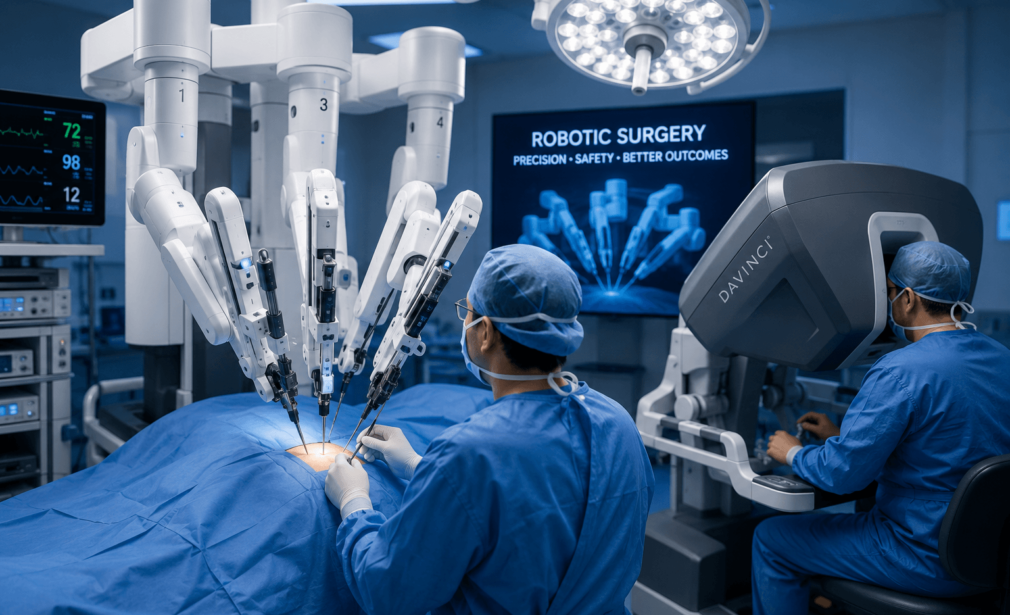
- The Surgeon Console Dr. Datta sits at a console positioned away from the operating table. Through the console’s high-definition stereoscopic viewer, she sees a magnified, three-dimensional view of the operative field — a view that is significantly clearer and more detailed than what the naked eye or a standard laparoscope provides. Hand and finger movements at the console are translated in real time to instrument movements inside the patient’s body.
- The Patient Cart (Robotic Arms) A four-armed robotic cart is positioned next to the operating table. Three arms hold surgical instruments; one holds the camera. The instruments are inserted into the patient’s body through small (8 mm) port incisions — the same size as conventional laparoscopy.
- The Vision Cart Processes and displays the 3D HD video feed, provides the surgical team with the operative view, and integrates intraoperative data.
What Is Robotic Surgery? Understanding the Da Vinci Xi System
Robotic surgery does not mean a robot operates on you independently. The surgeon is in complete control at every moment. What the robotic system provides is a set of precision tools and a visual interface that dramatically extends the surgeon’s capabilities beyond what the human hand and eye alone can achieve.
The da Vinci Xi Surgical System — the platform used by Dr. Sujata Datta at Fortis Anandapur — is the world’s most advanced and most widely studied robotic surgical platform, with over 12 million robotic procedures performed globally. It is the gold standard in robotic-assisted minimally invasive surgery.
How the Da Vinci Xi Works:
The system has three principal components:
- The Surgeon Console Dr. Datta sits at a console positioned away from the operating table. Through the console’s high-definition stereoscopic viewer, she sees a magnified, three-dimensional view of the operative field — a view that is significantly clearer and more detailed than what the naked eye or a standard laparoscope provides. Hand and finger movements at the console are translated in real time to instrument movements inside the patient’s body.
- The Patient Cart (Robotic Arms) A four-armed robotic cart is positioned next to the operating table. Three arms hold surgical instruments; one holds the camera. The instruments are inserted into the patient’s body through small (8 mm) port incisions — the same size as conventional laparoscopy.
- The Vision Cart Processes and displays the 3D HD video feed, provides the surgical team with the operative view, and integrates intraoperative data.
Key Technical Features of the Da Vinci Xi:
- 3D High-Definition Vision: The stereoscopic camera provides a three-dimensional, high-definition image of the operative field magnified up to 10 times. Surgeons operating laparoscopically work with a flat, 2D image. The difference in spatial awareness and tissue plane identification is substantial.
- EndoWrist® Instruments: These proprietary instruments have seven degrees of freedom — replicating and exceeding the natural range of motion of the human wrist. Standard laparoscopic instruments are essentially rigid sticks; EndoWrist instruments can rotate 360° and bend in ways the human hand cannot, allowing the surgeon to work in confined anatomical spaces with precision impossible by conventional means.
- Tremor Filtration: The system electronically filters out any natural hand tremor from the surgeon’s movements before they are transmitted to the instruments. The result is perfectly steady, controlled instrument motion even during the most delicate dissection or suturing.
- Motion Scaling: The system can scale the surgeon’s movements — so that a 2 cm movement of the surgeon’s hand becomes a 1 cm movement of the instrument. This allows for finer, more controlled movements in small anatomical spaces.
- Integrated Fluorescence Imaging (Firefly™): Allows real-time visualisation of tissue perfusion, lymph nodes, and vascular structures using near-infrared imaging — an important safety tool during complex pelvic dissections.
- 3D High-Definition Vision: The stereoscopic camera provides a three-dimensional, high-definition image of the operative field magnified up to 10 times. Surgeons operating laparoscopically work with a flat, 2D image. The difference in spatial awareness and tissue plane identification is substantial.
- EndoWrist® Instruments: These proprietary instruments have seven degrees of freedom — replicating and exceeding the natural range of motion of the human wrist. Standard laparoscopic instruments are essentially rigid sticks; EndoWrist instruments can rotate 360° and bend in ways the human hand cannot, allowing the surgeon to work in confined anatomical spaces with precision impossible by conventional means.
- Tremor Filtration: The system electronically filters out any natural hand tremor from the surgeon’s movements before they are transmitted to the instruments. The result is perfectly steady, controlled instrument motion even during the most delicate dissection or suturing.
- Motion Scaling: The system can scale the surgeon’s movements — so that a 2 cm movement of the surgeon’s hand becomes a 1 cm movement of the instrument. This allows for finer, more controlled movements in small anatomical spaces.
- Integrated Fluorescence Imaging (Firefly™): Allows real-time visualisation of tissue perfusion, lymph nodes, and vascular structures using near-infrared imaging — an important safety tool during complex pelvic dissections.
Why Robotic Surgery? How It Compares to Laparoscopy and Open Surgery
| Feature | Open Surgery | Laparoscopic Surgery | Robotic Surgery (Da Vinci Xi) |
|---|---|---|---|
| Incision Size | 10–20 cm | 3–5 small (5–10 mm) | 3–4 small (8 mm) |
| Vision | Direct (2D) | 2D Camera | 3D HD, up to 10× Magnification |
| Instrument Motion | Full Hand Range | Fixed-axis (Limited Wrist) | 7 Degrees of Freedom (EndoWrist) |
| Tremor Control | Surgeon-dependent | Surgeon-dependent | Electronically Filtered |
| Precision in Confined Spaces | Limited | Moderate | Excellent |
| Suturing Quality | Excellent | Good (Technically Demanding) | Excellent (Enhanced by Wristed Instruments) |
| Blood Loss | Higher | Moderate | Low |
| Post-operative Pain | Significant | Mild to Moderate | Mild |
| Hospital Stay | 3–7 Days | 1–3 Days | 1–2 Days |
| Recovery Time | 4–8 Weeks | 2–4 Weeks | 1–3 Weeks |
| Risk of Conversion | N/A | Moderate (to Open Surgery) | Low |
| Best For | Very Large Pathology Where Laparoscopic Access Is Not Feasible | Straightforward to Moderate Complexity Cases | Moderate to High Complexity Cases, Confined Pelvic Dissections & Precise Reconstruction |
Robotic Gynaecological Procedures Performed by Dr. Sujata Datta
Dr. Datta performs all major gynaecological procedures robotically using the da Vinci Xi at Fortis Anandapur, Kolkata. Each procedure below links to its dedicated service page for full clinical detail.
1. Robotic Hysterectomy
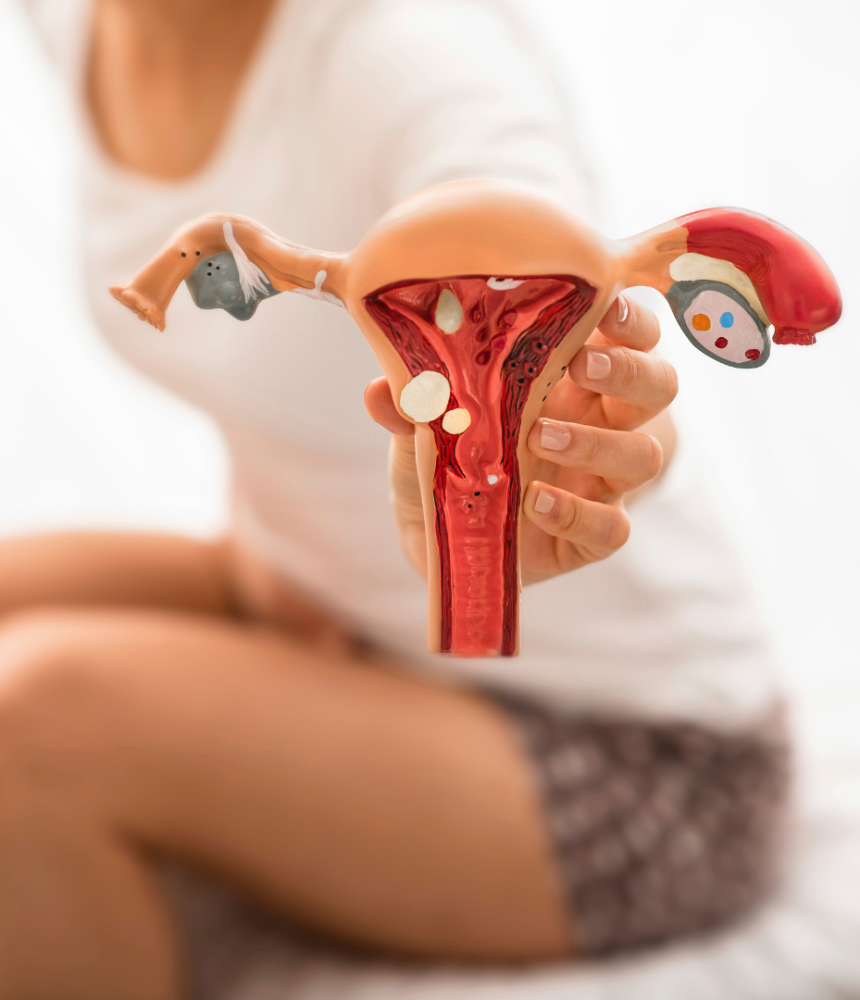
A hysterectomy — surgical removal of the uterus — is the most commonly performed major gynaecological operation worldwide. Indications include symptomatic uterine fibroids (when fertility preservation is not required), adenomyosis, abnormal uterine bleeding unresponsive to other treatments, uterine prolapse, and certain gynaecological cancers.
Robotic hysterectomy with the da Vinci Xi is performed through four small incisions. The uterus — and in some cases the cervix, fallopian tubes, and/or ovaries, depending on the indication — is carefully dissected and removed. The vaginal vault is then sutured closed using the robotic system’s enhanced suturing capability.
Types of Robotic Hysterectomy Performed:
- Total Laparoscopic Hysterectomy (TLH): Removal of uterus and cervix
- Subtotal Hysterectomy: Removal of uterus, preserving the cervix (in selected cases)
- Hysterectomy with Bilateral Salpingo-Oophorectomy (BSO): Removal of uterus, cervix, fallopian tubes, and ovaries
Advantages of Robotic Hysterectomy over Open Hysterectomy:
- Dramatically reduced blood loss and significantly lower transfusion rates
- Superior vault closure with the robotic suturing capability — reducing the risk of vaginal vault dehiscence (a rare but serious complication)
- Hospital stay of 1–2 days versus 3–5 days for abdominal hysterectomy
- Return to normal activities in 2–3 weeks versus 6–8 weeks
- Significantly less post-operative pain
- Minimal scarring
Particularly suited to: Large uterus (fibroid uterus equivalent to 16–20+ weeks size), prior caesarean sections or abdominal surgeries, obesity, or any case where a complex dissection is anticipated.
👉 Learn more: Robotic Hysterectomy at Gynae Care Kolkata
2. Robotic Myomectomy
Myomectomy — surgical removal of uterine fibroids while preserving the uterus — is the procedure of choice for women with symptomatic fibroids who wish to retain their uterus and/or their fertility.
Robotic myomectomy with the da Vinci Xi offers two critical advantages over conventional laparoscopic myomectomy:
First, the 3D magnification and EndoWrist instruments allow the surgeon to dissect fibroids from the uterine muscle with exceptional precision, even when fibroids are located in anatomically difficult positions — such as the posterior uterine wall, deep within the myometrium, or adjacent to the fallopian tube ostia.
Second — and arguably most important for women planning future pregnancy — the multi-layer uterine repair (closure of the myometrial defect) is of a higher quality robotically than is typically achievable laparoscopically. The quality of this repair directly affects the risk of uterine rupture in a subsequent pregnancy. A meticulous, well-sutured repair is the single most important factor in making future pregnancy safe after myomectomy.
Particularly suited to:
- Multiple fibroids (5 or more)
- Large fibroids (>8–10 cm)
- Deeply intramural fibroids
- Posterior wall fibroids
- Women who want the most secure uterine repair possible for future pregnancy
👉 Learn more: Fibroid Treatment in Kolkata
3. Robotic Surgery for Endometriosis
Endometriosis — particularly deep infiltrating endometriosis (DIE) — is arguably the condition that benefits most from the da Vinci Xi’s capabilities. DIE involves endometriotic tissue invading structures adjacent to the uterus, including:
- The uterosacral ligaments
- The rectovaginal septum
- The posterior wall of the bladder
- The ureter
- The bowel (rectosigmoid colon)
Surgical treatment of DIE requires precise dissection in these critical, confined anatomical areas — where the proximity of the ureter, bowel, and major blood vessels demands an exceptional standard of surgical precision. The 3D vision, EndoWrist instruments, and tremor filtration of the da Vinci Xi make robotic surgery the optimal platform for this work.
Robotic procedures for endometriosis include:
- Excision of peritoneal endometriotic implants (preferred over ablation — removes disease at its root)
- Robotic ovarian cystectomy for endometriomas (chocolate cysts)
- Robotic adhesiolysis — careful separation of pelvic adhesions
- Dissection of deep endometriosis from uterosacral ligaments and rectovaginal septum
- Ureterolysis — freeing the ureter from endometriotic encasement
- Bowel shaving or disc excision (in close collaboration with a colorectal surgeon) for rectal endometriosis
As a member of the Endometriosis Foundation of India and the Indian Association of Gynaecological Endoscopists (IAGE), Dr. Datta is one of the very few surgeons in Kolkata with the specialist training to manage Stage III and IV endometriosis robotically.
👉 Learn more: Endometriosis Treatment in Kolkata
4. Robotic Sacrocolpopexy (for Pelvic Organ Prolapse)
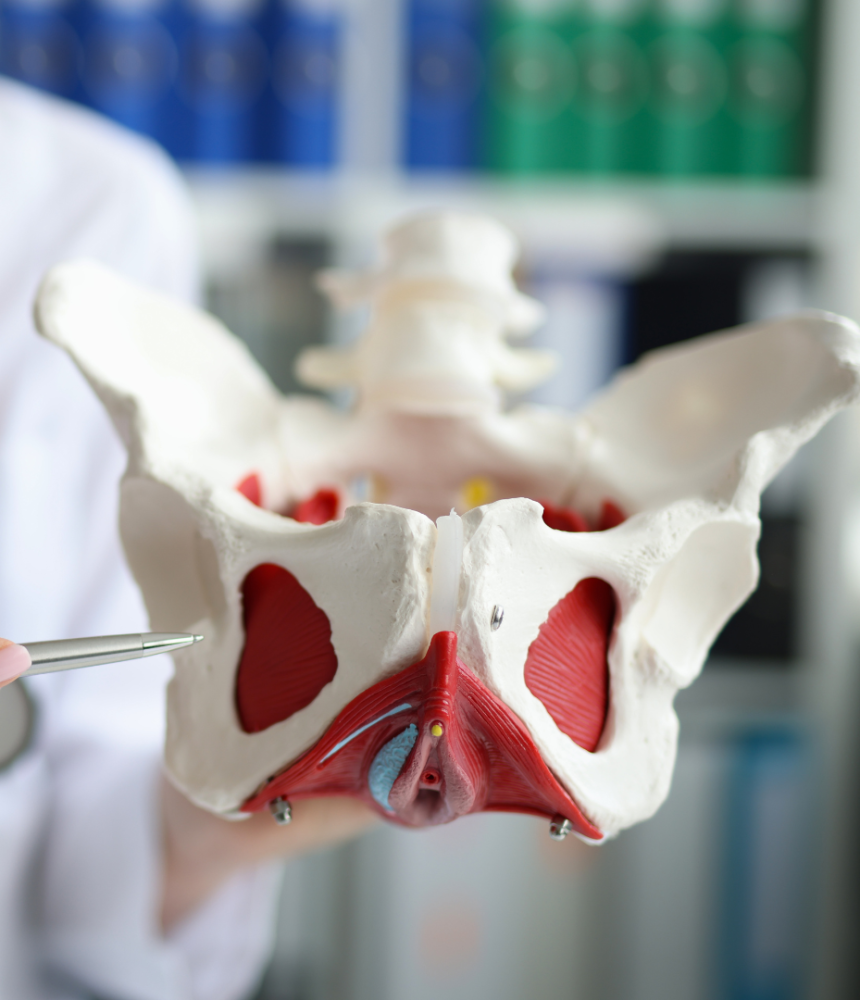
Pelvic organ prolapse — the descent of the uterus, bladder, rectum, or vaginal walls due to weakening of the pelvic floor support structures — is a common and significantly underreported condition affecting women, particularly following childbirth or after menopause.
Robotic sacrocolpopexy is the gold-standard surgical procedure for treating vault prolapse (following prior hysterectomy) and uterovaginal prolapse. It involves the placement of a surgical mesh that suspends and supports the vaginal apex (or uterus, in uterus-preserving variants) by attaching it to the sacral promontory (a bony landmark at the base of the spine) — restoring normal anatomical position.
Why Robotic Sacrocolpopexy is Preferred: Sacrocolpopexy requires suturing in an extremely deep, narrow part of the pelvis — the presacral space and the vaginal apex — where conventional laparoscopic instruments have significant mechanical limitations. The robotic system’s wristed instruments, 3D depth perception, and superior suturing capability make this procedure technically far more reproducible and precise than its laparoscopic equivalent.
Advantages over Vaginal Repair (Colporrhaphy):
- Superior long-term anatomical outcomes — lower prolapse recurrence rates
- Mesh is placed abdominally (not vaginally), associated with lower mesh erosion rates
- Preserves vaginal length and sexual function
- Particularly recommended for younger women, sexually active women, and those with high-grade prolapse
Types of Prolapse Treated:
- Vault prolapse (post-hysterectomy)
- Uterovaginal prolapse (uterus-preserving sacrohysteropexy variant available)
- Cystocoele (bladder prolapse)
- Rectocoele (rectal prolapse)
👉 Learn more: Pelvic Organ Prolapse Treatment in Kolkata
5. Robotic Ovarian Cystectomy
Ovarian cysts — fluid-filled sacs on or within the ovary — are extremely common. Most are benign and resolve spontaneously. However, certain types require surgical removal, including:
- Endometriomas (chocolate cysts caused by endometriosis)
- Dermoid cysts (teratomas)
- Persistent functional cysts that fail to resolve
- Suspicious or complex cysts where malignancy needs to be excluded
Robotic ovarian cystectomy removes the cyst while preserving the healthy ovarian tissue. The da Vinci Xi’s precision is particularly valuable in endometrioma removal, where the interface between the cyst wall and healthy ovarian cortex must be identified and dissected carefully to maximise preservation of ovarian reserve — the follicles that determine future fertility and hormonal function.
Advantages:
- Minimised damage to healthy ovarian tissue versus conventional laparoscopy
- Superior haemostasis (bleeding control) within ovarian tissue
- Reduced risk of inadvertent cyst rupture during dissection (particularly important for dermoid and suspicious cysts)
- Can be combined with endometriosis treatment in the same robotic procedure
👉 Learn more: Ovarian Cyst Treatment in Kolkata
Fortis Hospital Anandapur: Where Robotic Surgery Happens
All robotic gynaecological procedures performed by Dr. Sujata Datta take place at Fortis Hospital, Anandapur, Kolkata — one of Eastern India’s premier tertiary care hospitals and one of the limited number of centres in the region equipped with the da Vinci Xi Surgical System.
Why Fortis Anandapur?
- Houses the da Vinci Xi Surgical System — the most advanced version of the da Vinci platform currently available
- Dedicated minimally invasive surgery theatre with a fully trained robotic surgical nursing and technical team
- Full critical care support — intensive care, blood bank, interventional radiology — available if needed
- Experienced anaesthesiology team with specific expertise in gynaecological laparoscopic and robotic procedures
- Stringent sterilisation and infection control protocols
- NABH-accredited facility
The combination of Dr. Datta’s internationally trained surgical expertise and Fortis Anandapur’s infrastructure means patients receive a level of care that meets — and in many respects exceeds — the standards of major UK and European robotic surgery centres.
Who Is a Good Candidate for Robotic Gynaecological Surgery?
Dr. Sujata Datta assesses each patient individually. In general, robotic surgery is the preferred approach for:
- Women with complex gynaecological conditions — Stage III–IV endometriosis, multiple or large fibroids, advanced prolapse, or large ovarian cysts
- Women who have had previous abdominal surgeries — where adhesions may complicate laparoscopic access
- Women with obesity — where the mechanical advantages of robotic instrumentation are particularly beneficial
- Women where uterine or pelvic reconstruction quality is critical — particularly those planning future pregnancy after myomectomy
- Patients who want the fastest possible recovery — minimising time away from work, family, and daily life
- Any patient for whom avoiding a large abdominal scar is a priority
Robotic surgery is generally not required for:
- Very straightforward, small, single-fibroid cases managed equally well by standard laparoscopy
- Submucosal fibroids treated hysteroscopically (no abdominal incision at all)
- Simple ovarian cysts in young women with no complicating factors
- Minor endometriosis without deep infiltration
Dr. Datta’s approach is always to recommend the procedure that achieves the best outcome for each individual patient — not the most technologically complex option by default.
Dr. Sujata Datta: Kolkata's Robotic Gynaecological Surgery Specialist
Credentials That Stand Apart in Eastern India
Dr. Sujata Datta’s qualifications and training place her in an exceptionally select group:
- MBBS — Medical foundation
- MRCOG (UK) — Member of the Royal College of Obstetricians and Gynaecologists
- FRCOG (UK) — Fellow of the Royal College of Obstetricians and Gynaecologists — the highest credential in the specialty, held by fewer than 7,000 gynaecologists worldwide
- DFFP — Diploma of the Faculty of Family Planning (UK)
- CCT (London) — Certificate of Completion of Training, London
Her surgical training in the United Kingdom — where robotic gynaecological surgery has been established in major teaching hospitals for over a decade — means Dr. Datta brings genuine, internationally validated robotic surgical expertise to Kolkata. This is not a recently acquired adjunct skill; it is core to her surgical practice.
Memberships That Define Her Specialist Standing
Organisation | Relevance to Robotic Surgery |
Association of Gynaecological Robotic Surgeons | Dedicated professional body for robotic gynaecological surgeons — peer-reviewed training and practice standards |
Indian Association of Gynaecological Endoscopists (IAGE) | National authority for minimally invasive gynaecological surgery |
Endometriosis Foundation of India | Specialist focus on the condition most requiring advanced robotic technique |
Royal College of Obstetricians and Gynaecologists (UK) | Global benchmark for gynaecological surgical standards |
Bengal Obstetrics & Gynaecological Society | Active regional contributor and educator |
What to Expect: Your Robotic Surgery Journey
Consultation at Gynae Care Kolkata (Camac Street) Dr. Datta reviews your history, examinations, and investigations. If robotic surgery is indicated, she explains the procedure, its benefits, risks, alternatives, and expected recovery in full. All questions are answered before any decision is made.
Pre-Operative Assessment at Fortis Anandapur Approximately 1–2 weeks before surgery, you attend Fortis Anandapur for pre-operative investigations: blood tests, ECG, chest X-ray (where appropriate), anaesthesia review, and consent documentation. Necessary pre-operative preparations (iron supplementation, hormonal therapy) will already have been arranged by Dr. Datta.
The Day of Surgery You are admitted to Fortis Anandapur on the day of, or the day before, surgery. The robotic procedure is performed under general anaesthesia. Most procedures take 1.5–3 hours depending on complexity.
Recovery in Hospital Most patients are mobile within hours of surgery. Oral fluids and then diet are resumed the same day or the following morning. Urinary catheter removal and discharge typically occur within 24–48 hours.
Recovery at Home Light activities within a few days. Most patients return to desk work within 1–2 weeks and full physical activity within 3–4 weeks. Dr. Datta provides written post-operative instructions and is accessible for concerns during recovery.
Follow-Up Post-operative review at Gynae Care Kolkata at 2 weeks and 6 weeks. Additional review intervals are planned based on the specific procedure performed.
Frequently Asked Questions About Robotic Gynaecological Surgery in Kolkata
Robotic surgery in gynaecology is a form of minimally invasive surgery in which the surgeon operates using a robotic system — specifically the da Vinci Xi Surgical System at Gynae Care Kolkata — that provides 3D high-definition magnification, wristed instrument movement, and electronic tremor filtration. The surgeon controls the system from a console and is in full control at all times; the robot does not operate independently. Robotic surgery is used for procedures such as hysterectomy, myomectomy (fibroid removal), endometriosis excision, sacrocolpopexy (prolapse repair), and ovarian cystectomy. It combines the benefits of minimally invasive surgery (small incisions, fast recovery) with surgical precision that exceeds what conventional laparoscopy offers.
For straightforward procedures, skilled laparoscopy and robotic surgery produce comparable outcomes. However, for complex gynaecological cases — deep infiltrating endometriosis, multiple or large fibroids, complex hysterectomy, pelvic organ prolapse repair, and cases with prior abdominal surgery — robotic surgery offers meaningful clinical advantages. These include 3D high-definition vision (versus 2D in laparoscopy), wristed instrument movement with seven degrees of freedom (versus fixed-axis laparoscopic instruments), electronic tremor filtration, and superior suturing capability in deep pelvic spaces. For women where surgical precision and the quality of tissue reconstruction are critical — such as myomectomy before a planned pregnancy — robotic surgery is the preferred approach at Gynae Care Kolkata.
Yes. Dr. Sujata Datta, FRCOG (UK) and member of the Association of Gynaecological Robotic Surgeons, performs robotic gynaecological surgery using the da Vinci Xi Surgical System at Fortis Hospital, Anandapur, Kolkata. Procedures available include robotic hysterectomy, robotic myomectomy, robotic surgery for endometriosis, robotic sacrocolpopexy for pelvic organ prolapse, and robotic ovarian cystectomy. This level of specialist robotic gynaecological surgery is rare in Eastern India.
The da Vinci Xi Surgical System is available at Fortis Hospital, Anandapur, Kolkata, where Dr. Sujata Datta performs all robotic gynaecological procedures. Fortis Anandapur is one of the few hospitals in Eastern India equipped with the most advanced iteration of the da Vinci platform (the Xi model), supported by a dedicated robotic surgical team and full critical care infrastructure.
Recovery after robotic gynaecological surgery is significantly faster than after open (abdominal) surgery. Most patients are discharged from Fortis Anandapur within 1–2 days. Light activities can typically be resumed within a few days to a week. Most women return to desk work within 1–2 weeks and full physical activity within 3–4 weeks. This compares with 6–8 weeks’ recovery following open surgery. The exact recovery timeline depends on the specific procedure performed and individual patient factors, and Dr. Datta provides personalised post-operative guidance at discharge.
Robotic surgery with the da Vinci Xi is extensively studied and has been performed in over 12 million procedures worldwide. It is approved by regulatory authorities across the globe including the US FDA and CE (European), and is practised in the world’s leading hospitals. When performed by a trained robotic surgeon, it is associated with lower blood loss, lower complication rates, shorter hospital stays, and faster recovery than open surgery. Dr. Sujata Datta’s training in the UK and her membership in the Association of Gynaecological Robotic Surgeons ensures that robotic procedures at Gynae Care Kolkata are performed to international safety standards.
Yes — in fact, uterine and fertility preservation is one of the most important advantages of robotic surgery for gynaecological conditions. Robotic myomectomy removes fibroids while leaving the uterus intact, with a higher quality uterine repair than conventional laparoscopy — critical for women planning future pregnancy. Robotic endometriosis surgery is designed to excise disease while protecting the ovaries, fallopian tubes, and uterus. Robotic sacrocolpopexy can be performed in a uterus-preserving variant (sacrohysteropexy). Dr. Datta’s approach is always uterus-first and fertility-aware.
The da Vinci Xi is the most advanced model in Intuitive Surgical’s da Vinci robotic platform — the world’s most widely used and extensively studied robotic surgical system. Compared to earlier models (Si, S), the Xi features a redesigned arm architecture that allows greater range of motion and easier repositioning during surgery, a fully integrated 3D HD camera with up to 10x magnification, compatibility with Firefly™ fluorescence imaging for real-time tissue perfusion assessment, and the same proprietary EndoWrist® instruments with seven degrees of freedom. The Xi is the preferred platform for complex multi-quadrant procedures and is currently the global standard for advanced robotic gynaecological surgery.
Dr. Sujata Datta at Gynae Care Kolkata is among the most credentialed robotic gynaecological surgeons in Kolkata and Eastern India. She holds the FRCOG and MRCOG from the Royal College of Obstetricians and Gynaecologists, UK, has a CCT (Certificate of Completion of Training) from London, and is an active member of the Association of Gynaecological Robotic Surgeons. She performs robotic hysterectomy, myomectomy, endometriosis surgery, sacrocolpopexy, and ovarian cystectomy using the da Vinci Xi at Fortis Hospital, Anandapur.
Robotic surgery with the da Vinci Xi is performed through 3–4 small port incisions, each approximately 8 mm in diameter. These are comparable in size to conventional laparoscopic incisions. The resulting marks are small, typically fade significantly over several months, and are placed at locations on the lower abdomen that are easily covered by clothing. There is no large abdominal scar, and most patients find the cosmetic outcome far preferable to open surgery.
The cost of robotic gynaecological surgery in Kolkata varies depending on the procedure, the number and complexity of fibroids or disease sites, the duration of surgery, the hospital stay, and anaesthesia charges at Fortis Anandapur. As robotic surgery uses advanced technology (the da Vinci Xi system has significant per-procedure instrument costs), it is generally more expensive than conventional laparoscopy. However, the shorter hospital stay, faster recovery, and lower complication rates mean that the total cost — including recovery time and return to work — often compares favourably. Specific cost estimates are provided during Dr. Datta’s consultation after a full assessment of your case. Many health insurance plans in India now cover robotic surgery for gynaecological indications; please check with your insurer.